After more than four decades shaping the video game industry, legendary developer Warren Specter has announced his retirement. However, as he steps away from the world of interactive entertainment, Specter is using his platform to ensure that one of his most significant achievements doesn’t fade into obscurity. The veteran game designer wants the world to remember that his team at Junction Point Studios played a crucial role in bringing Oswald the Lucky Rabbit—one of Walt Disney’s earliest animated creations—back into the spotlight through the 2010 action-adventure game Epic Mickey.
Specter’s passionate plea comes at a particularly relevant moment, as Disney prepares to launch a new Oswald miniseries on Disney+. While excitement builds around this animated project, the retiring developer has expressed concern that the contributions of his game development team are being overshadowed and potentially forgotten. In a recent LinkedIn post, Specter noted that many people seem to view the upcoming Disney+ show as the character’s debut, which he finds troubling given the groundwork his team laid over a decade ago.
The Remarkable History of Oswald the Lucky Rabbit
To understand the significance of Epic Mickey’s contribution, one must first appreciate the complicated history of Oswald the Lucky Rabbit. Created in 1927 by Walt Disney and his chief animator Ub Iwerks, Oswald was Disney’s first major animated star. The cheerful rabbit character appeared in a series of successful Universal Pictures cartoons and seemed destined for greatness. However, in 1928, Disney lost the rights to Oswald in a devastating contract dispute with Universal. This loss became a defining moment in entertainment history—forced to create a new character, Disney and Iwerks developed Mickey Mouse, who would go on to become the most recognizable cartoon character in the world.
For nearly eight decades, Oswald remained the property of Universal, a painful reminder of Disney’s early struggles. The character languished in relative obscurity while Mickey Mouse built a global empire. It wasn’t until 2006 that Disney CEO Bob Iger made a remarkable trade deal with NBC Universal. In exchange for the rights to ESPN sportscaster Al Michaels, Disney reclaimed ownership of Oswald—a swap that seemed absurd to some but deeply meaningful to Disney enthusiasts and company leadership. Reports indicate that the 2003 development document for Epic Mickey actually helped inspire Iger’s determination to bring Oswald home.
Epic Mickey’s Groundbreaking Contribution
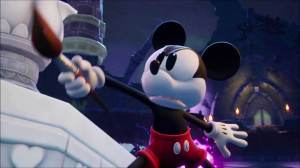
When Epic Mickey launched in 2010 for the Nintendo Wii, it represented far more than just another platforming adventure. The game marked Oswald’s first appearance in a Disney production since 1928—a gap of over 80 years. Specter and his team at Junction Point Studios crafted a narrative that brought Mickey and Oswald together for the first time, exploring themes of jealousy, redemption, and brotherhood. The game presented Oswald as a bitter, forgotten figure ruling over the Wasteland, a realm populated by abandoned Disney characters and concepts. This creative interpretation gave the historic character genuine emotional depth and introduced him to an entirely new generation of fans.
The 2012 sequel, Epic Mickey: The Power of Two, expanded on this foundation significantly. As Specter noted in his LinkedIn statement, this game gave Oswald a voice for the first time in any Disney story—a milestone that should not be understated. The sequel also developed Oswald’s love interest, Ortensia the Cat, another character from the original 1920s cartoon series. These contributions helped establish Oswald as a fully realized character within the modern Disney canon, setting the stage for future appearances.
A Legacy Worth Remembering
In his farewell message to the industry, Specter was candid about his feelings regarding the lack of recognition his team has received. “I have to admit that I’m a little bitter about the lack of credit the team gets for all this,” he wrote. “I was blown away that Disney trusted us and saw fit to reintroduce the little guy in a game. But the team did a great job and deserves to be recognized for it before Hollywood makes people forget the games ever existed.” His words reflect a broader concern within the gaming industry about how video game contributions to popular culture are often overlooked when properties transition to other media.
The timing of Specter’s retirement coincides with renewed interest in the Epic Mickey franchise. In 2024, Epic Mickey Rebrushed brought a modernized remaster to contemporary gaming platforms, introducing the adventure to players who missed it originally. Around that time, Specter acknowledged that Epic Mickey 3 was unlikely to happen, though he mentioned having ideas for an unmade sequel. As Warren Specter closes the chapter on his remarkable career—which includes landmark titles like System Shock, Deus Ex, and Thief—he leaves behind a legacy of innovation and a heartfelt request that we remember the team who brought a forgotten rabbit back to life.
Expert Opinion: Warren Specter’s concerns highlight an ongoing tension in the entertainment industry where video game contributions are frequently minimized when intellectual properties achieve mainstream success through film or television. As gaming continues to grow as a dominant cultural force, the industry must advocate more effectively for recognition of its creative achievements. The Epic Mickey team’s work on Oswald represents a significant case study in how games can revitalize dormant characters and prepare them for broader multimedia success.