
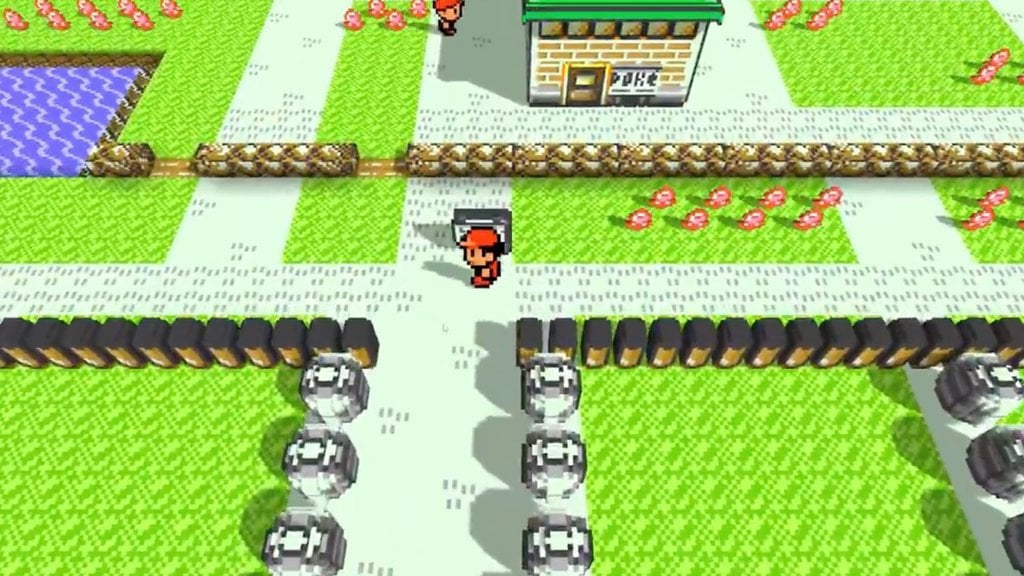
The gaming community has been buzzing with excitement over an ambitious fan project called Gen1Recomp, which transforms the classic first-generation Pokémon games into stunning three-dimensional worlds using innovative voxel technology. The project represents a remarkable technical achievement, breathing new life into the beloved Game Boy titles that launched a global phenomenon over two decades ago. However, what initially appeared to be a straightforward celebration of nostalgic gaming has quickly evolved into a heated controversy that touches on one of the most divisive topics in modern game development: the role of artificial intelligence in creative projects.
The original Pokémon Red and Blue games, released by Nintendo in 1996 in Japan and 1998 internationally, remain cultural touchstones for millions of gamers worldwide. These titles introduced players to the Kanto region and the original 151 Pokémon, establishing gameplay mechanics and design principles that continue to influence the franchise today. The games’ simple 2D pixel art, while charming, has long inspired fans to imagine what these adventures might look like with modern graphical capabilities. Gen1Recomp represents perhaps the most ambitious attempt yet to realize that vision, converting the flat sprites and environments into fully three-dimensional voxel-based worlds that maintain the original aesthetic while adding depth and dimensionality.
Revolutionary Voxel Technology Brings Kanto to Life
Voxel technology, which uses three-dimensional cubic units to construct digital environments, has gained significant traction in the indie gaming scene over the past decade. Games like Minecraft popularized the aesthetic, demonstrating that blocky, geometric worlds could be both visually appealing and technically innovative. The Gen1Recomp project applies these principles to the Pokémon universe, converting the original game’s tile-based maps into explorable 3D spaces where players can experience Pallet Town, Viridian Forest, and the Pokémon League from entirely new perspectives. The mod preserves the essential gameplay while fundamentally reimagining how players interact with the familiar world.
Technical analysis from gaming enthusiasts suggests the project involves sophisticated reverse-engineering of the original Game Boy ROM files, combined with custom rendering engines capable of interpreting 2D game data as three-dimensional information. This type of recompilation project has precedent in the modding community, with similar efforts targeting Nintendo 64 titles like Super Mario 64 and The Legend of Zelda: Ocarina of Time. However, the transformation from 2D to 3D presents unique challenges that the Gen1Recomp developer has apparently overcome with impressive results.
AI Revelation Ignites Vibe Coding Controversy
The controversy erupted when the project’s developer revealed that significant portions of Gen1Recomp were created using artificial intelligence tools, a practice increasingly referred to as “vibe coding” within the programming community. Vibe coding describes a development approach where creators use AI assistants to generate code based on natural language descriptions of desired outcomes, rather than writing every line manually. Proponents argue this democratizes game development, allowing creative individuals without extensive programming backgrounds to realize their visions. Critics, however, contend it undermines the craft of software development and raises serious questions about attribution, originality, and the sustainability of projects built on AI-generated foundations.
The gaming community’s response has been sharply divided. Some fans argue that the end result matters more than the methods used to achieve it, pointing out that Gen1Recomp represents an impressive technical achievement regardless of how the code was produced. Others express concern about the reliability and maintainability of AI-generated code, noting that developers who don’t fully understand their own codebase may struggle to fix bugs or add features. The debate also intersects with broader conversations about AI’s impact on creative industries, from visual art to music composition, where similar controversies have emerged over the past two years.
The Future of Fan Projects in the AI Era
This controversy arrives at a pivotal moment for the fan modding community, which has long operated in legal gray areas while producing some of gaming’s most beloved unofficial content. Nintendo, in particular, has historically taken aggressive action against fan projects utilizing their intellectual property, sending cease-and-desist letters to developers of projects ranging from Pokémon Uranium to AM2R, a fan remake of Metroid II. The addition of AI tools to this equation introduces new complications, as questions emerge about whether AI-assisted projects might face different legal or ethical scrutiny than traditionally developed modifications.
Industry observers note that the Gen1Recomp controversy may serve as a preview of debates to come as AI tools become increasingly sophisticated and accessible. The gaming industry is already grappling with how to integrate these technologies into commercial development pipelines, with major studios experimenting with AI for everything from procedural content generation to quality assurance testing. Fan projects like Gen1Recomp exist at the intersection of passion, creativity, and increasingly complex technological and ethical considerations that the gaming community will need to navigate carefully in the years ahead.
Expert Opinion: The Gen1Recomp controversy represents a watershed moment for gaming’s modding community, signaling that AI-assisted development will become an unavoidable topic of debate regardless of project scale. As these tools become more accessible, communities will need to establish clearer norms around disclosure and attribution, potentially developing new categories that distinguish between AI-assisted and traditionally coded projects. The outcome of this particular debate may well set precedents that shape fan development culture for the next decade.