
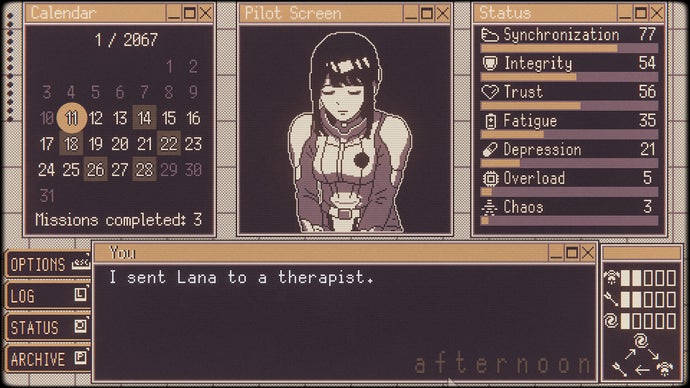
The raising simulation genre has carved out a dedicated niche in gaming, though it often gravitates toward particular relationship dynamics that don’t appeal to everyone. However, a new entry is shaking up the formula by combining the beloved mechanics of character development sims with the high-octane world of giant robot combat. Valkyrie Iteration: Mecha Pilot Raising Pocket Simulator offers players the unique opportunity to mentor and develop a young mecha pilot, guiding her through the challenges of both combat training and emotional growth — hopefully without the devastating psychological consequences that fans of certain famous anime series might expect.
The game’s title playfully references a concern that longtime mecha fans will immediately recognize. The Evangelion franchise, which revolutionized the genre in the 1990s, became notorious for subjecting its young pilots to extreme psychological trauma, existential crises, and emotional breakdowns. Valkyrie Iteration appears to acknowledge this legacy while promising a potentially more nurturing approach to pilot development. The game challenges players to balance the demanding requirements of military combat training with the mental health and emotional wellbeing of their charge, creating a unique management experience that goes beyond simple stat optimization.
A Fresh Take on the Raising Simulation Genre
Raising simulations have a rich history in gaming, dating back to titles like Princess Maker in the early 1990s, which established many of the genre’s core conventions. These games typically involve managing various statistics, making decisions about education and activities, and guiding a character’s development over an extended period. While the genre has remained popular in Japan, many Western players have found the traditional father-daughter dynamics somewhat uncomfortable or simply not aligned with their interests. Valkyrie Iteration addresses this by reframing the relationship through a military mentorship lens, which may appeal to a broader audience while maintaining the satisfying progression systems that make raising sims compelling.
The visual novel format serves as an ideal vehicle for this type of narrative-heavy gameplay. Visual novels have experienced a significant surge in popularity over the past decade, with Steam reporting thousands of releases in the genre annually. The combination of static or semi-animated artwork, extensive dialogue, and branching storylines allows developers to create deeply immersive character studies without the massive budgets required for fully animated productions. For a game centered on psychological development and relationship building, this format provides the intimacy and narrative depth necessary to make players genuinely invested in their pilot’s success and wellbeing.
The Psychology of Mecha Pilots in Popular Culture
The psychological toll of piloting massive combat machines has been a recurring theme in mecha fiction since at least the 1970s. Mobile Suit Gundam introduced audiences to the concept of young, often reluctant pilots thrust into the horrors of war, while later series like Evangelion pushed these themes to their logical extremes. The children in Evangelion weren’t just fighting monsters — they were processing abandonment issues, seeking parental approval, and confronting existential questions about human connection, all while strapped into biomechanical nightmares. This created compelling drama but also established a template where mecha piloting was inherently traumatic.
Valkyrie Iteration seems to be offering players agency in determining whether their pilot follows this dark path or develops into a well-adjusted warrior. This represents an interesting evolution in how games approach mental health themes. Rather than presenting psychological struggle as inevitable narrative drama, the game appears to treat emotional stability as a goal to be actively pursued through player decisions. This gamification of mental health management could provide both entertaining gameplay loops and potentially meaningful messages about the importance of support systems and work-life balance, even in high-pressure military environments.
What Players Can Expect from the Full Experience
While detailed gameplay mechanics haven’t been fully revealed, the raising sim genre typically involves scheduling activities, managing resources, and making narrative choices that affect character development. Players can likely expect to balance combat training sessions that improve piloting skills with rest periods, social activities, and potentially therapeutic interventions that maintain psychological health. The challenge will presumably come from optimizing this balance — pushing too hard might create an effective pilot who burns out spectacularly, while being too protective could leave the pilot unprepared for actual combat scenarios.
The game’s self-aware title and apparent tonal awareness suggest developers who understand both the conventions they’re working within and the expectations of their audience. For players who have long enjoyed mecha fiction but felt uncomfortable with how certain series handled their young characters, Valkyrie Iteration offers an intriguing alternative — the chance to be the supportive mentor these pilots deserved, guiding them toward both professional excellence and personal happiness. Whether the game ultimately delivers on this promise remains to be seen, but the concept alone represents a thoughtful evolution of both the raising sim and mecha genres.
Expert Opinion: The intersection of raising simulations with mecha narratives represents an emerging trend toward more emotionally intelligent game design. As players increasingly seek meaningful character relationships in their games, titles like Valkyrie Iteration that explicitly address mental health within genre frameworks could signal a broader shift in how Japanese-influenced games handle psychological themes — moving from trauma as spectacle toward wellness as gameplay objective.