
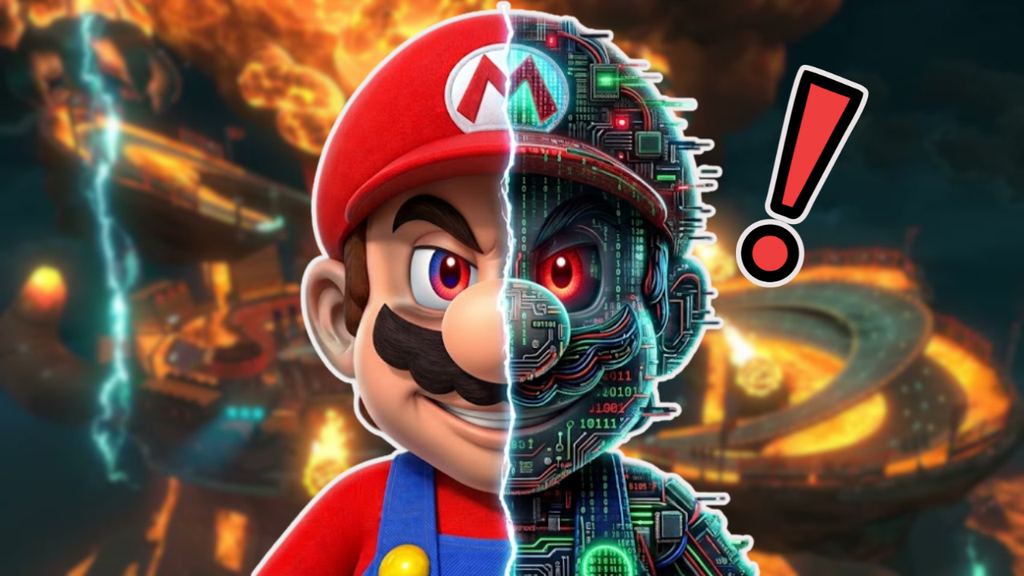
If you’ve ever felt the urge to throw your controller across the room after being hit by a blue shell out of nowhere, or watched in disbelief as Bowser blazed past you on a straightaway despite your three-mushroom lead, take a deep breath. You’re not imagining things, and you’re definitely not losing your mind. The game has indeed been working against you, and this carefully orchestrated deception has been part of Mario Kart’s DNA since its very first release on the Super Nintendo Entertainment System in 1992.
What many players have long suspected but few truly understood is that Nintendo implemented a sophisticated system of artificial intelligence manipulation that goes far beyond simple difficulty settings. This system, which game developers and industry insiders have come to call “rubber-banding AI,” ensures that computer-controlled opponents always remain competitive regardless of how well or poorly the human player performs. It’s a design philosophy that has sparked countless debates among gamers but has ultimately proven to be one of the most successful formulas in video game history.
The Rubber-Band Effect: How Nintendo Keeps Races Competitive
The concept behind rubber-banding is elegantly simple yet fiendishly effective. When a player pulls ahead of the pack, the AI-controlled racers receive invisible boosts to their speed and performance. Conversely, when the human player falls behind, the computer opponents slow down just enough to keep the race interesting. This creates an elastic effect similar to a rubber band being stretched and then snapping back, hence the name. The system ensures that races almost always feel close and exciting, regardless of the actual skill gap between the player and the computer.
Nintendo’s implementation of this system was revolutionary for its time. In the early 1990s, most racing games offered static difficulty levels where AI opponents would simply drive faster or slower based on a predetermined setting. Mario Kart’s dynamic approach meant that every race could provide a satisfying challenge without overwhelming newcomers or boring experienced players. The system also explains why those infamous blue shells and lightning bolts seem to strike at the worst possible moments—the game is actively working to prevent any single racer from gaining an insurmountable lead.
The Psychology Behind the Design
From a game design perspective, Nintendo’s approach demonstrates a deep understanding of player psychology. Research in gaming psychology has consistently shown that players experience the most satisfaction when facing challenges that are difficult but achievable. Too easy, and the victory feels hollow; too hard, and frustration drives players away. By dynamically adjusting the competition, Mario Kart maintains what psychologists call the “flow state”—that sweet spot where challenge and skill are perfectly balanced.
This design philosophy extends beyond just speed adjustments. The item distribution system in Mario Kart is also heavily weighted based on position. Players in last place are far more likely to receive powerful items like stars, bullet bills, and the dreaded blue shell, while race leaders typically receive defensive items like banana peels and green shells. This creates a natural catch-up mechanism that keeps all players engaged until the very last moment of the race, making Mario Kart an enduring favorite for multiplayer gatherings where skill levels vary widely among participants.
Legacy and Influence on Modern Gaming
The success of Mario Kart’s rubber-banding system has influenced countless racing games and competitive multiplayer titles over the past three decades. Games ranging from Crash Team Racing to modern titles like Fall Guys have adopted similar dynamic difficulty adjustment systems. While some purists argue that such systems undermine skill-based competition, the overwhelming commercial success of Mario Kart—with over 180 million copies sold across the franchise—suggests that most players appreciate the excitement these mechanics generate.
As gaming continues to evolve, Nintendo’s 1992 innovation remains a masterclass in balancing accessibility with engagement. Whether you view it as cheating or clever design, one thing is certain: those seemingly unfair defeats have kept generations of players coming back for just one more race, proving that sometimes the best game design is the kind you never even notice—until a blue shell reminds you it exists.
Expert Opinion: Nintendo’s rubber-banding AI represents one of the most influential innovations in multiplayer game design, prioritizing fun and engagement over pure competitive fairness. This approach has proven remarkably prescient, as modern matchmaking systems and dynamic difficulty adjustment continue to build upon these foundational principles. The enduring popularity of Mario Kart suggests that for casual multiplayer experiences, perceived fairness and constant excitement matter more than absolute skill-based outcomes.