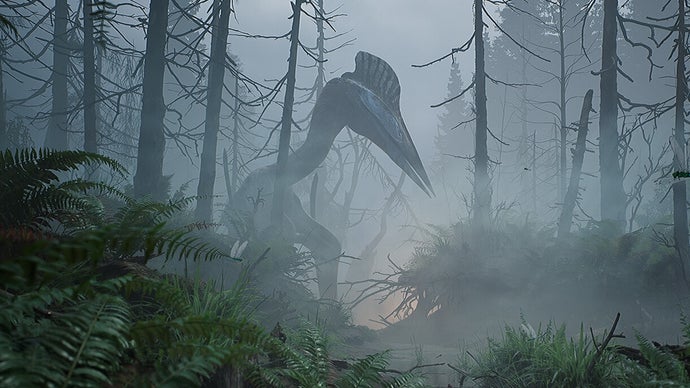
Former Rare design director Gary Napper has offered fascinating insights into the creative connections between his upcoming dinosaur survival horror game The Lost Wild and Rare’s mysterious cancelled project Everwild. In recent discussions about his current work, Napper revealed that both games share fundamental design philosophies centered around creating believable, autonomous creatures that exist beyond simple player-antagonist relationships. The revelation provides a rare glimpse into the cancelled Everwild project while simultaneously building anticipation for The Lost Wild’s unique approach to dinosaur encounters.
Napper, whose impressive portfolio includes work on the critically acclaimed Alien: Isolation, explained that creating truly convincing non-human entities presents unique challenges that differ significantly from traditional horror game design. According to the veteran designer, Alien: Isolation was in some ways an “easier design challenge” compared to both Everwild and The Lost Wild. The reasoning behind this surprising assessment lies in the fundamental nature of the creatures being designed. The xenomorph in Isolation had a straightforward objective: hunting and killing the player. This singular focus, while terrifying in execution, simplified the behavioral design requirements considerably.
The Challenge of Creating Believable Prehistoric Creatures
The Lost Wild represents a more ambitious undertaking in creature design philosophy. Rather than simply programming dinosaurs to relentlessly pursue players, Napper and his team are working to create animals that feel genuinely alive within their ecosystem. These prehistoric creatures must appear “believable and consistent up close,” exhibiting behaviors that suggest they have their own agendas, territories, and survival instincts beyond merely serving as obstacles for players to overcome. This approach mirrors the natural world, where predators don’t constantly hunt and prey animals display complex behavioral patterns influenced by numerous environmental factors.
The connection to Everwild is particularly intriguing given how little is publicly known about the cancelled Rare project. Everwild was announced in 2019 and showcased a visually stunning world filled with magical creatures and nature-based gameplay. However, the project underwent significant development troubles, including reported restarts and leadership changes, before Microsoft ultimately cancelled it during cost-cutting measures in the summer of 2024. Napper’s comments suggest that Everwild shared The Lost Wild’s commitment to creating creatures with authentic behavioral patterns and genuine autonomy within their virtual environments.
Lessons from Alien: Isolation’s Groundbreaking AI
Napper’s work on Alien: Isolation at Creative Assembly and Sega established him as one of the industry’s foremost experts in creature AI design. Released in 2014, Isolation earned widespread acclaim for its xenomorph AI, which learned player behaviors and adapted its hunting patterns accordingly. The alien couldn’t be killed, only avoided or temporarily deterred, creating an atmosphere of persistent dread that many consider the definitive Alien gaming experience. The game’s success demonstrated that players responded powerfully to enemies that felt intelligent and unpredictable rather than following scripted patterns.
However, Napper’s current work requires a fundamentally different approach to creature intelligence. While the xenomorph needed only to be a convincing predator, the dinosaurs in The Lost Wild must embody complete animals with varied behavioral states. They need to hunt when hungry, rest when tired, defend territory when threatened, and potentially ignore players entirely when other priorities take precedence. This behavioral complexity creates immersion but also presents significant technical and design challenges that push beyond what Isolation achieved.
The Future of Immersive Creature Design in Gaming
The Lost Wild has generated substantial anticipation within the gaming community since its announcement, with many fans drawing favorable comparisons to classic dinosaur survival experiences while noting its apparent emphasis on atmospheric horror. The game promises an experience where dinosaurs are treated as animals rather than monsters, creating scenarios where understanding and respecting these creatures becomes as important as surviving their attacks. Napper’s pedigree and the team’s commitment to authentic creature behavior suggest The Lost Wild could represent a significant evolution in how games portray non-human entities.
The cancellation of Everwild remains a disappointment for many Rare fans who were captivated by its enchanting aesthetic and promised creature interactions. However, Napper’s continued work in this design space means the philosophies developed during Everwild’s production haven’t been entirely lost. As The Lost Wild moves toward release, it carries forward lessons learned from both the cancelled nature fable and the survival horror masterpiece that preceded it, potentially offering players an unprecedented level of believable creature interaction in a survival horror context.
Expert Opinion: Gary Napper’s approach to creature AI design represents a significant evolution in gaming, moving beyond simple predator-prey dynamics toward genuinely autonomous entities. This philosophy could establish new industry standards for wildlife representation in games, influencing everything from survival horror to open-world adventures. If The Lost Wild successfully delivers on these promises, it may prove that the most terrifying encounters come not from relentless hunters, but from unpredictable animals that treat players as just another element in their complex ecosystem.