In a collaboration that feels destined by the dark stars themselves, video game legend American McGee has joined forces with Rob Reger, the creative mind behind the beloved ’90s alternative icon Emily the Strange, to produce a limited edition plush toy that celebrates nearly three decades of gothic creativity. The partnership, which was first revealed in April 2024, has now gone live through McGee’s Plushie Dreadfuls brand, offering fans of both franchises a chance to own a piece of collaborative art history that bridges the worlds of video games and underground comic culture.
American McGee first rose to prominence in the gaming industry during the 1990s, working at id Software on groundbreaking titles including Doom, Doom II, and Quake. However, it was his 2000 release “American McGee’s Alice” that truly cemented his reputation as a master of dark, twisted reimaginings. The game presented a nightmarish version of Lewis Carroll’s Wonderland, following an Alice traumatized by the death of her family in a house fire. The sequel, “Alice: Madness Returns,” released in 2011, continued to explore themes of mental illness, trauma, and recovery through its hauntingly beautiful and disturbing imagery.
A Creative Partnership Nearly Three Decades in the Making
The connection between McGee and Reger stretches back to 1998, when the two creative minds first crossed paths at precisely the moment McGee was developing his dark Alice vision. As McGee noted on social media, this timing makes Alice and Emily “creative twins” in many ways. Both characters emerged from a similar countercultural moment in the late 1990s, when alternative aesthetics were finding mainstream acceptance while still maintaining their rebellious edge. Emily the Strange first appeared in 1991 on stickers distributed by Rob Reger’s company Cosmic Debris, eventually expanding into a merchandise empire that included clothing, accessories, books, and eventually graphic novels.
Emily the Strange became a defining symbol for an entire generation of young people who felt outside the mainstream. The perpetually 13-year-old character, with her jet-black hair, simple black dress, and quartet of mysterious cats, represented a quiet rebellion against conformity. Her catchphrases like “Get Lost” and “Wish You Weren’t Here” resonated with teenagers who found beauty in darkness and individuality in standing apart from the crowd. The character’s influence on alternative fashion and youth culture throughout the 1990s and early 2000s cannot be overstated, inspiring countless young people to embrace their own strangeness.
The Plushie Dreadfuls Collection Expands
The Emily the Strange plush marks an exciting addition to McGee’s Plushie Dreadfuls line, which began as a passion project following the success of his Alice games. The brand specializes in creating high-quality stuffed toys inspired by the deformed white rabbit plush that Alice clutches throughout McGee’s games — a comfort object that asylum orderlies eventually force her to relinquish. This origin story imbues each Plushie Dreadful with a sense of emotional significance, transforming simple stuffed animals into symbols of comfort, resilience, and the childlike parts of ourselves we fight to protect.
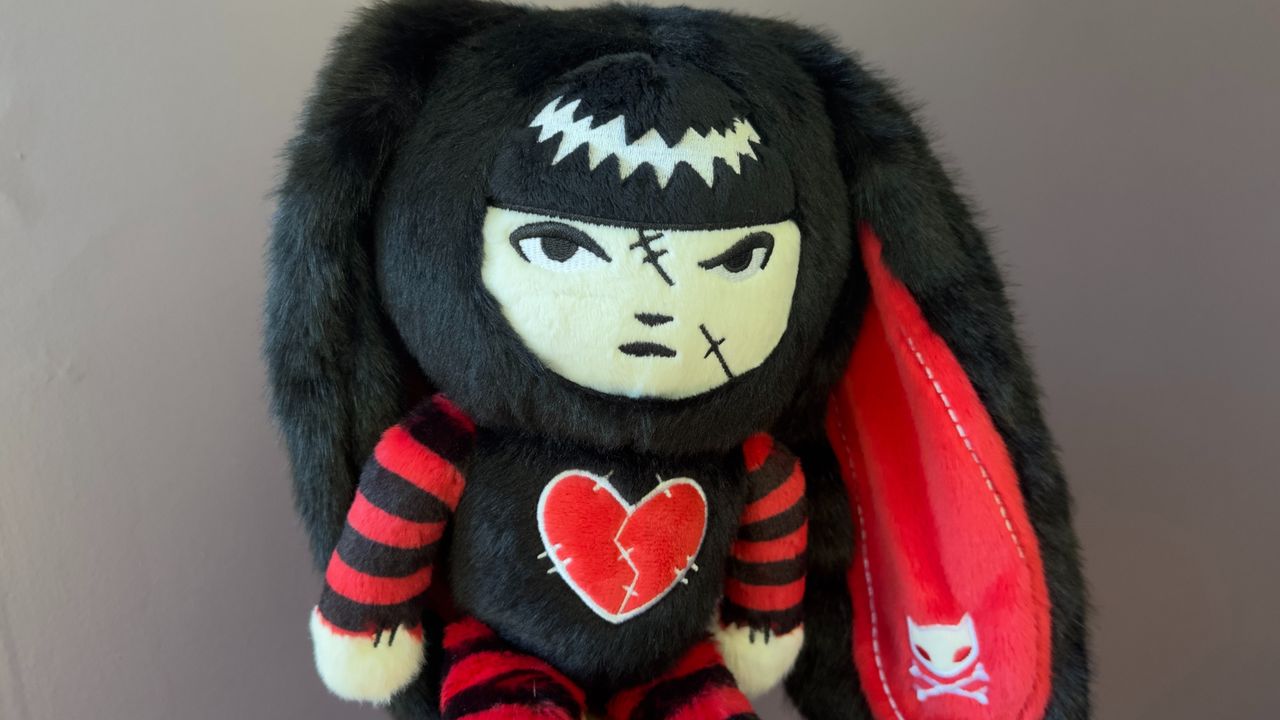
The limited edition collaboration includes 2,000 numbered plushies available at $49 each, with an additional 200 collector editions that feature cards autographed by both McGee and Reger. Each set comes with complementary accessories including a tote bag featuring Emily as a bunny spray-painting “I Love Cats” complete with an anarchist symbol, a pen topped with a detailed rubber mold of the character, and a fuzzy coin purse matching the plush’s rabbit hood design. The attention to detail extends to the plush itself, which features a broken red heart stitched to the chest, red-and-black striped limbs with a deliberately smeared, bleeding effect, and a cat-and-crossbones embroidered inside the floppy black ears.
A Testament to Timeless Alternative Culture
What makes this collaboration particularly meaningful is how it demonstrates the enduring appeal of gothic and alternative aesthetics. While mainstream fashion trends come and go, the all-black ensemble and celebration of the strange and unusual have remained constant touchstones for those who find beauty in darkness. Both Emily the Strange and American McGee’s Alice tapped into something primal about the experience of feeling different, of finding solace in shadows, and of refusing to conform to expectations about what young women should be or enjoy.
The plush itself serves as a physical manifestation of these themes. Emily’s transformation into a rabbit — echoing the white rabbit imagery so central to both Carroll’s original Wonderland and McGee’s darker interpretation — creates a meaningful synthesis of both creators’ visions. The dark scar curving around the plush’s face mimics the button eyes and damaged ears characteristic of other Plushie Dreadfuls designs, while maintaining Emily’s essential character: those black hole eyes that contain all her power, the simple elegance of her eternal black dress, and the subtle menace of a character who has always existed slightly outside normal reality.
For fans who grew up finding themselves in these characters, the collaboration represents more than just merchandise — it’s a validation that strangeness endures, that the things that made us feel like outsiders can become the very things that connect us to others. As the accompanying collector card reminds owners: “Think for Yourself, Do it Yourself, Be Yourself. Or, better yet, be all you can’t be.” In an era of mass-produced sameness, that message feels more relevant than ever.
Expert Opinion: This collaboration signals a growing trend of video game creators leveraging their intellectual property through premium collectibles and lifestyle brands, moving beyond traditional merchandise into artisanal products that command higher price points and foster deeper community engagement. The limited nature of the release and the nostalgic appeal to millennials who came of age during the peak of both franchises suggests strong collector value, while the partnership model may inspire similar cross-media collaborations between gaming icons and alternative culture brands in the coming years.