
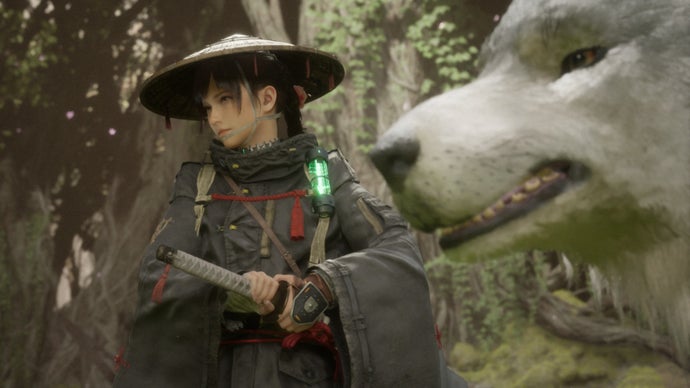
Game Freak’s ambitious departure from the Pokémon franchise initially shows tremendous promise with Beast Of Reincarnation, a Sekiro-inspired action game that opens with a sprawling fantasy forest filled with deadly creatures and satisfying combat mechanics. The opening moments deliver everything action game enthusiasts crave: a striking visual aesthetic, a companion dog that shoots fireballs, and most importantly, a parry system with a deeply gratifying clang that rewards skilled timing. However, what begins as an exciting new direction for the legendary Japanese developer quickly reveals itself to be a hollow experience that fails to maintain its initial momentum.
The game drops players into a beautifully rendered forestscape populated by hostile woodland creatures, including spore-sprouting monsters and intimidating wildlife. Armed with a katana and sporting a distinctive hat, players encounter a combat system that initially feels both accessible and rewarding. The parry window is notably generous, allowing even less experienced players to deflect attacks from massive enemies, including a towering nine-foot grizzly bear that throws boulder-sized punches. This accessibility suggested that Game Freak was crafting a Sekiro-like experience that could welcome newcomers while still delivering the satisfying rhythm of precision combat.
Game Freak’s Bold Departure From Pokémon
For over three decades, Game Freak has been synonymous with the Pokémon franchise, having created the original games in 1996 and continuing to develop mainline entries ever since. The studio’s decision to venture into the action-adventure genre represents a significant creative risk, particularly given the current popularity of souls-like and Sekiro-inspired games. FromSoftware’s 2019 masterpiece Sekiro: Shadows Die Twice revolutionized action combat with its posture-based system and demanding parry mechanics, spawning countless imitators and inspiring developers worldwide. Game Freak’s attempt to enter this competitive space demonstrates a desire to prove their creative versatility beyond their signature monster-catching formula.
The Japanese gaming industry has seen numerous studios attempt similar diversification strategies with varying degrees of success. Square Enix, Capcom, and other major developers have all experimented with genres outside their comfort zones, sometimes producing surprise hits and other times delivering forgettable experiences. Beast Of Reincarnation falls squarely into the latter category, suggesting that expertise in one genre doesn’t automatically translate to mastery of another. The game’s fundamental issues stem not from technical incompetence but from a lack of depth that becomes increasingly apparent as players progress beyond the opening hours.
Style Over Substance: Where The Experience Falls Apart
Despite its attractive presentation and initially satisfying mechanics, Beast Of Reincarnation quickly reveals its limitations. The cool aesthetic elements—the distinctive hat, the fireball-shooting canine companion, and the gratifying parry sound effects—serve as a cunning facade masking a fundamentally shallow experience. The game has been compared to chewing gum: the initial burst of sweetness rapidly fades, leaving players mechanically going through the motions without genuine engagement or challenge. This phenomenon is particularly damaging in the souls-like genre, where player engagement typically deepens as they master increasingly complex combat scenarios.
The generous parry window that initially seemed like a welcome accessibility feature ultimately undermines the game’s long-term appeal. Sekiro and similar titles derive their satisfaction from the tension between risk and reward, where successfully timing a perfect deflection feels earned because failure carries consequences. When parrying becomes effortless, the combat loop loses its essential tension, transforming intense encounters into repetitive button-pressing exercises. This design philosophy suggests a fundamental misunderstanding of what makes the genre compelling to its dedicated fanbase.
The Current State Of Souls-Like Games
The souls-like and Sekiro-inspired subgenres have exploded in popularity over the past decade, with dozens of titles attempting to capture the magic of FromSoftware’s groundbreaking work. Successful entries like Lies of P, Wo Long: Fallen Dynasty, and Thymesia have demonstrated that other developers can create compelling experiences within this framework while adding their own unique twists. However, the market has also seen numerous failures from studios that copied surface-level elements without understanding the deeper design principles that make these games resonate with players. Beast Of Reincarnation unfortunately joins this latter group, offering visual appeal without the mechanical depth necessary for lasting engagement.
For Game Freak, this experiment represents a valuable learning opportunity, even if the final product disappoints. The studio’s willingness to explore new territory should be commended, even as the execution falls short. Perhaps future non-Pokémon projects will benefit from the lessons learned here, leading to more fully realized experiences that can stand alongside the genre’s best offerings. Until then, players seeking a genuine Sekiro-like experience would be better served looking elsewhere, as Beast Of Reincarnation’s initial promise quickly evaporates into forgettable mediocrity.
Expert Opinion: Game Freak’s foray into the action genre demonstrates the significant challenge studios face when departing from established franchises. While Beast Of Reincarnation shows technical competence in presentation, its failure to understand the core engagement loop of souls-like games suggests the studio would benefit from deeper genre study before their next experimental project. The title will likely be remembered as an interesting footnote in Game Freak’s history rather than a successful creative expansion.