
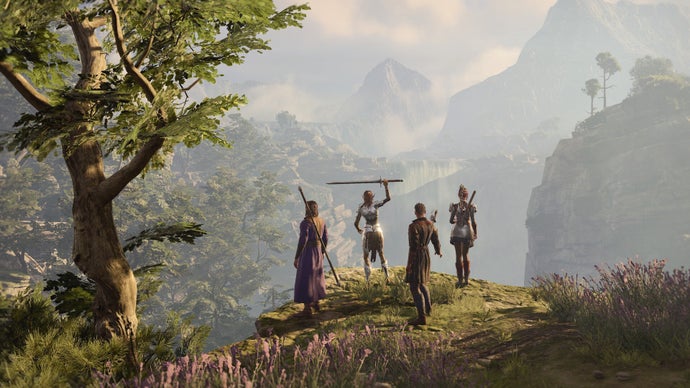
The question of who might inherit the prestigious Baldur’s Gate franchise from Larian Studios continues to spark discussion across the gaming industry. In recent developments, Owlcat Games, the studio behind the critically acclaimed Warhammer 40,000: Rogue Trader and Pathfinder series, has expressed both enthusiasm and humility about the possibility of taking on such an iconic property. The studio’s co-founder has described the prospect as both “a great honour” and “a great challenge,” while reaffirming the company’s deep commitment to the classic RPG genre that made Baldur’s Gate a household name among gamers.
The conversation around Baldur’s Gate’s future has intensified following Larian Studios’ announcement that they would not be developing Baldur’s Gate 4, despite the massive critical and commercial success of Baldur’s Gate 3 in 2023. The game won numerous Game of the Year awards and sold millions of copies, reinvigorating interest in classic RPG mechanics and proving there was still enormous appetite for deep, narrative-driven role-playing experiences. This success has naturally led fans and industry observers to speculate about which studio might be capable of continuing this beloved legacy.
Owlcat’s Proven Track Record in Complex RPGs
Owlcat Games has established itself as one of the most respected developers in the computer role-playing game space over the past several years. Their Pathfinder: Kingmaker and Pathfinder: Wrath of the Righteous titles demonstrated a mastery of adapting complex tabletop rule systems into engaging video game experiences. More recently, their Warhammer 40,000: Rogue Trader brought the grimdark universe of Games Workshop to life with the same attention to mechanical depth and narrative branching that characterized their earlier work. These accomplishments have positioned Owlcat as a natural candidate in discussions about Baldur’s Gate’s future.
The studio’s expertise in handling intricate rule systems derived from tabletop gaming makes them particularly well-suited for a franchise built on Dungeons & Dragons mechanics. Baldur’s Gate has always been defined by its faithful adaptation of D&D rules, creating a gameplay experience that feels authentically connected to the tabletop tradition. Owlcat’s experience with Pathfinder, a system that itself evolved from D&D’s third edition, suggests they possess the technical and design knowledge necessary to honor that heritage while potentially innovating for modern audiences.
Competition Heats Up Among RPG Studios
Owlcat is not the only studio being mentioned in connection with potential Baldur’s Gate development. Archetype Entertainment, currently working on the science fiction RPG Exodus, was reportedly offered the opportunity to work on the franchise according to former studio head James Ohlen, a veteran of the original Baldur’s Gate games from his time at BioWare. The Expanse: Osiris Reborn developers at Deck Nine have also been mentioned in industry discussions, suggesting that Wizards of the Coast and Hasbro are actively considering their options for this valuable intellectual property.
The Baldur’s Gate franchise carries enormous weight in gaming history. The original game, released in 1998, is widely credited with reviving the computer RPG genre and establishing many conventions that persist today. Developed by BioWare, it spawned a sequel widely considered one of the greatest RPGs ever made, along with expansion packs and spin-offs that expanded the Forgotten Realms setting. Any studio taking on Baldur’s Gate 4 would need to navigate not only the expectations set by Larian’s recent triumph but also decades of accumulated fan devotion to the series.
Owlcat Reaffirms CRPG Commitment Amid Industry Challenges
Beyond the Baldur’s Gate speculation, Owlcat’s leadership has emphasized their ongoing dedication to the CRPG genre regardless of what projects they ultimately pursue. This commitment comes at a time when the gaming industry faces significant economic pressures, with many studios pivoting toward more commercially predictable genres or live-service models. Owlcat’s willingness to continue focusing on complex, narrative-heavy role-playing games represents a vote of confidence in the audience’s appetite for such experiences, particularly following the unprecedented success of Baldur’s Gate 3.
The studio’s approach to game development, characterized by lengthy campaigns, extensive dialogue trees, and deep character customization systems, aligns closely with what fans expect from the Baldur’s Gate series. Whether or not Owlcat ultimately receives the opportunity to work on Baldur’s Gate 4, their continued presence in the CRPG space ensures that fans of the genre will have quality options in the years ahead. The studio’s acknowledgment of both the honor and the challenge such a project would represent demonstrates a mature understanding of what inheriting a legendary franchise truly entails.
Expert Opinion: The selection of Baldur’s Gate 4’s developer will likely hinge on demonstrating both technical mastery of D&D mechanics and a creative vision that can distinguish the next entry from Larian’s approach. Owlcat’s systematic experience with tabletop adaptations positions them strongly, but Wizards of the Coast may ultimately prioritize a studio willing to take significant creative risks rather than simply replicating past success. The franchise’s next chapter could define the CRPG genre’s direction for the next decade.