A quarter-century after the enigmatic science fiction thriller Donnie Darko captivated audiences and cemented its status as one of cinema’s most enduring cult classics, director Richard Kelly is returning to the haunting world he created with an ambitious literary sequel. The filmmaker has announced plans to release an 800-page novel that picks up the story approximately 14 months after the events of the original film, promising to expand the mythology that has fascinated fans for over two decades.
The novel, officially titled ‘The Philosophy of Time Travel,’ takes its name from the fictional book written by Roberta Sparrow—better known as Grandma Death—within the original film. This metafictional choice signals Kelly’s intention to delve deeper into the complex temporal mechanics that made the original movie such a puzzle for viewers to unravel. According to reports from Variety, the book will be presented as a collection of found documents from Donnie’s parents, offering an intimate and unconventional narrative perspective on the aftermath of their son’s tragic sacrifice.
The Original Film’s Enduring Legacy
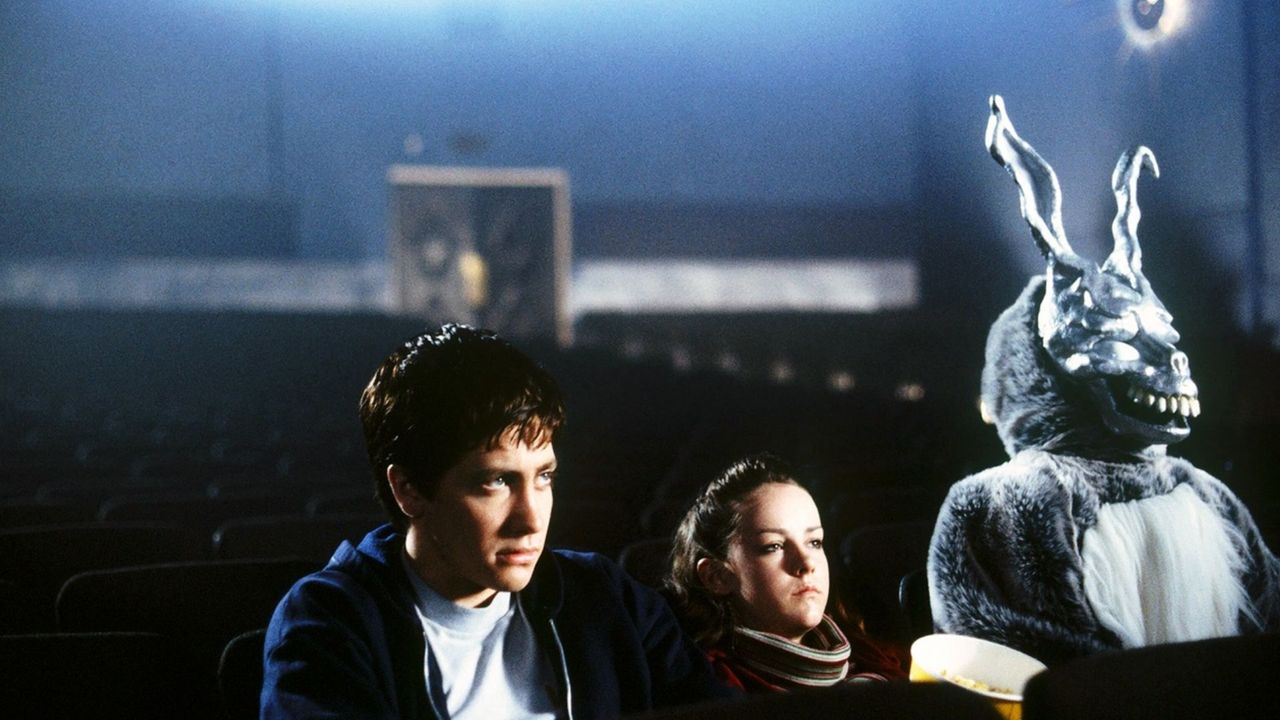
Released on October 26, 2001, Donnie Darko starred a young Jake Gyllenhaal in the role that would help launch his career into stardom. The film follows a troubled teenager in suburban Virginia who begins experiencing disturbing visions of a figure in a grotesque rabbit costume named Frank, who informs him that the world will end in 28 days, 6 hours, 42 minutes, and 12 seconds. The movie masterfully blends elements of psychological thriller, science fiction, and coming-of-age drama, exploring themes of fate, free will, mental illness, and the nature of time itself. The film’s conclusion sees Donnie sacrificing himself to save his family and restore the primary universe, creating one of cinema’s most debated and analyzed endings.
Despite a modest theatrical run that earned only $7.5 million worldwide, Donnie Darko found extraordinary success in the home video market and midnight movie screenings, eventually grossing over $10 million in DVD sales alone. The film’s intricate plot, memorable soundtrack featuring Echo and the Bunnymen’s ‘The Killing Moon’ and Tears for Fears’ ‘Mad World,’ and its atmospheric portrayal of 1988 suburban America resonated deeply with audiences who discovered it outside traditional theatrical release. A director’s cut released in 2004 added 20 minutes of footage and made the time travel elements more explicit, though opinions remain divided on which version represents the definitive experience.
A Decade in the Making
Kelly revealed that while he has been actively working on the novel for the past ten years, his efforts to conceptualize a proper Donnie Darko sequel extend back nearly two decades. This extended development period reflects the filmmaker’s commitment to honoring the original work while expanding its universe in meaningful ways. It’s worth noting that a previous sequel, ‘S. Darko,’ was released in 2009 without Kelly’s involvement, following Donnie’s younger sister Samantha. That film was widely panned by critics and rejected by fans, making Kelly’s return to the franchise all the more significant for the devoted community that has kept Donnie Darko alive in popular culture.
The Philosophy of Time Travel is scheduled for release in the final quarter of 2026, strategically timed to coincide with the 25th anniversary of the original film’s premiere. However, Kelly has made clear that the novel represents merely the first phase of a much larger creative vision. The director envisions the book being adapted into a film that could potentially spawn additional sequels, creating what he describes as the expansion of the ‘Donnie Darko World’ across multiple media formats.
Ambitious Plans for a Cinematic Return
Kelly has tantalized fans with hints about the narrative direction of his expanded universe. He revealed that substantial material has been developed involving a time jump of 28 years into the future, with significant events occurring around 2015 and 2016. The filmmaker teased that audiences will encounter ‘a lot of surprises when you realize who the characters really are in the reality of Southern California,’ suggesting that the tangent universe concept from the original film will play a central role. According to Kelly, the characters become involved in ‘a dream that lasted for 28 days’ that ultimately leads them to form a support group which transforms into a cult—a premise that promises to explore the psychological aftermath of experiencing temporal anomalies.
Perhaps most intriguingly, Kelly has expressed his vision for the on-screen sequel to incorporate animation in certain sections, followed by the substantial time jump that would allow the original cast members to reprise their iconic roles at their current ages. This creative approach would solve the practical challenge of continuing a story centered on teenage characters while honoring the actors who brought them to life. Kelly acknowledged the ambitious scope of his plans, stating that his ‘caveat with doing a real sequel was that I want to reunite the original cast, and I want to take it onto a gigantic scale.’ He candidly admitted that such an undertaking ‘takes time, and it has a price tag, and it’s hard to pull this off because it’s multiple movies.’ As of now, Kelly has not yet approached the original Donnie Darko cast about returning, but the foundation is being laid through this novelistic prelude. The Philosophy of Time Travel is currently available for preorder, offering devoted fans their first opportunity to return to the universe that has captivated them for a quarter century.
Expert Opinion: Richard Kelly’s decision to return to Donnie Darko through literature rather than immediately pursuing a film sequel demonstrates a mature, creator-driven approach to franchise expansion that prioritizes narrative integrity over commercial expedience. Given the original film’s reputation as a puzzle demanding multiple viewings, an 800-page novel offers the ideal format to explore the complex temporal mechanics without studio interference. If Kelly can successfully translate this literary foundation into the ambitious multi-film vision he describes, it could establish a new model for cult film revivals that respects both the source material and its dedicated fanbase.